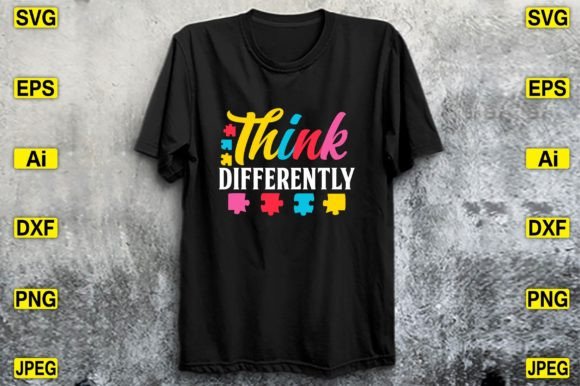
Think Differently: Graphics for T-Shirt Designs
As a graphic designer who has spent years refining brand identities and preparing files for print-on-demand fulfillment, I approach every new graphic design asset with a critical eye. It is not enough for a file to look pretty in a thumbnail; it must hold up under the scrutiny of real-world application. Recently, I reviewed the Think Differently T-shirt Design for a client project focused on neurodiversity awareness and inclusive branding. This review breaks down how this specific digital product performs when moved from a creative marketplace folder into a live client deliverable.
First Impressions and Visual Mood
The immediate impact of the Think Differently T-shirt Design is its balance between bold statement and gentle advocacy. In the context of T-Shirt Designs, clarity is paramount. This asset avoids the clutter often found in lower-quality clipart, offering a clean, modern aesthetic that resonates with contemporary tastes. The visual mood is empowering yet accessible, making it suitable for a wide demographic range. Whether you are designing for men, women, kids, or babies, the typography and accompanying illustration elements maintain a cohesive style that feels professional rather than amateurish.
For a client launching an Etsy shop or a small business branding campaign centered on autism awareness, this design provides a strong foundational element. It does not scream for attention through chaotic colors but rather invites engagement through thoughtful composition. This subtlety is crucial for brand identity work, where trust and professionalism must be established instantly.
Versatility Across Real-World Projects
While labeled primarily for apparel, I tested this asset across various mediums to gauge its true versatility. As an SVG design and PNG design, it integrates seamlessly into different workflows. Here is how it performed in specific scenarios:
- Cricut and Silhouette Projects: The cutting paths were clean, requiring minimal cleanup before sending to the machine. This is vital for crafters producing physical goods like stickers or heat-transfer vinyl applications.
- Social Media Graphics: When placed into Canva templates for Instagram posts or Pinterest pins, the design retained its integrity. It served as an excellent hero graphic for campaigns promoting inclusivity.
- Printable Design Products: I mocked up the design on greeting cards and posters. The resolution held up well, suggesting it is robust enough for high-quality home printing or professional offset printing.
- Packaging Design: For a boutique product line, I used the element as a decorative accent on box labels. It added a layer of emotional appeal without overwhelming the primary logo.
This flexibility makes it a valuable addition to any design bundle aimed at handmade businesses. It transitions smoothly from a sublimation design for mugs to a central feature on tote bags, proving its worth beyond just apparel.
Strategic Placement and Visual Hierarchy
Understanding where to place a creative design is as important as the design itself. The Think Differently T-shirt Design works best in large layout areas where it can breathe. On a t-shirt, centering it on the chest allows the message to be read clearly from a distance. In editorial design or web design contexts, using it as a supporting brand element alongside sans serif font headings creates a balanced visual hierarchy.
However, designers must exercise caution. This asset should be used carefully in crowded layouts. If you are combining it with complex backgrounds or low-contrast color palettes, the legibility may suffer. It is not ideal for minimalist corporate materials that require strict adherence to sterile, conservative aesthetics. Instead, it thrives in environments that value personality and human connection, such as community event flyers, birthday party invitations for neurodivergent children, or awareness campaign visuals.
Impact on Brand Consistency and Trust
In my experience, the right illustration can elevate a brand from generic to memorable. Using this asset consistently across marketing visuals helps build recognition. When a customer sees the same high-quality graphic on a website banner, a product mockup, and a physical sticker, it reinforces visual trust. The design’s emotional appeal fosters a sense of community, which is essential for brands operating in the neurodiversity space.
For small business owners, this translates to higher audience engagement. A polished look suggests a professional operation, encouraging customers to feel confident in their purchase. Whether you are selling via print-on-demand services or managing your own inventory, the perceived value of the product increases with the quality of the digital product used.
Practical Designer Notes for Implementation
Before committing this asset to a final client proof, I recommend several technical checks. First, test the design in black and white. This ensures that the contrast is sufficient and that the shape remains recognizable without color reliance. Next, preview it on both light and dark backgrounds. While PNG transparency usually handles this well, verifying edge smoothness is crucial for professional results.
Inspect the file formats thoroughly. If you are using it for a Cricut project, ensure the SVG nodes are optimized to prevent unnecessary cut lines. For sublimation or direct-to-garment printing, check the DPI of the PNG file to avoid pixelation at larger sizes. Compare how the design interacts with different typefaces. It pairs surprisingly well with handwritten font styles for a personal touch, but also holds its own against bold display font styles for a more impactful statement.
Finally, always confirm the commercial license terms. While many assets from the creative marketplace come with broad usage rights, ensuring you have the right to use it for client work or resale items like Etsy products is non-negotiable. This step protects both you and your client from legal issues down the line.
Final Verdict for Professional Use
The Think Differently T-shirt Design is more than just a simple clipart file; it is a versatile tool for modern designers. It fits naturally into projects requiring empathy, clarity, and style. From creating unique birthday gifts for girls and women to developing comprehensive brand identities for advocacy groups, this asset delivers consistent quality. By understanding its strengths in visual hierarchy and its limitations in complex layouts, designers can leverage it to create compelling, professional-grade work that resonates with audiences and supports business goals.