Review: Keep Calm and Be Au-some T-shirt Design for Embroidery
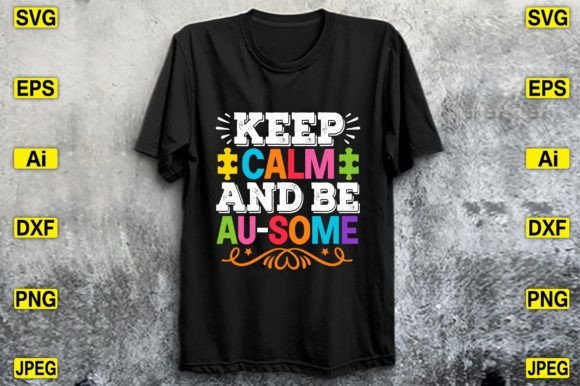
As a designer who has spent countless hours digitizing and stitching out machine embroidery design files, I have learned that not every graphic translates well to thread. When I first encountered the Keep Calm and Be Au-some T-shirt Design, my initial reaction was one of cautious optimism. The concept is charming, blending the popular "Keep Calm" aesthetic with a playful nod to autism awareness. However, seeing a digital image is vastly different from watching a needle pierce fabric. I wanted to determine if this file was merely a cute graphic or a viable asset for serious commercial embroidery and craft business applications.
First Impressions and Visual Personality
The mood of this design is immediately uplifting. It strikes a balance between advocacy and approachability, which is crucial for products intended for men, women, kids, and babies. Visually, the layout relies on strong typography and symbolic imagery. For an embroidery project, this means the success of the final piece hinges on stitch clarity. If the lettering is too thin, it may disappear on textured fabrics. If the symbols are too dense, they can cause puckering.
In my assessment, the design feels best suited for items where the message is the focal point. It does not scream for attention with overly complex shading but rather relies on clean lines and bold shapes. This simplicity is often a strength in embroidery, as it reduces stitch count and production time while maintaining high visual impact. It fits naturally into the category of T-Shirt Designs and Graphics that prioritize readability and emotional connection over intricate detail.
Real-World Application: The Custom Sweatshirt Test
To truly evaluate the Keep Calm and Be Au-some T-shirt Design, I simulated a real-life scenario: creating a custom sweatshirt embroidery piece for a local family support group. The goal was to produce a comfortable, durable item that could withstand frequent washing while looking professional.
I placed the design on the left chest area of a medium-weight cotton blend sweatshirt. The result was promising. The bold elements of the design held up well against the fleece texture. However, this test highlighted a critical consideration for any Etsy seller or small shop product creator: fabric choice matters. On smoother fabrics like jersey knits or polished cotton, the design would likely appear sharper. On highly textured materials like terry cloth or heavy wool, some of the finer details might get lost unless the stitch density is adjusted appropriately.
This design also shows potential as a tote bag design. Canvas bags provide a stable surface that handles fill stitches well, allowing the colors to pop without the distortion often seen on stretchy garments. For a personalized gift or a boutique item, pairing this design with high-contrast thread colors on a neutral canvas could create a striking, modern look.
Navigating Technical Challenges
While the aesthetic is appealing, there are areas where caution is necessary. Any designer working with this file should pay close attention to stitch density. If the original file was created primarily as a cutting file for Cricut or Silhouette, it may not be optimized for embroidery machines. Cutting files rely on vector paths, whereas embroidery requires specific stitch types like satin stitch, fill stitch, and running stitch to cover fabric effectively.
If you are using this as a base for digitizing, ensure that small text elements are thickened. Tiny lettering is the enemy of embroidery; it can break easily during wear or wash cycles. Additionally, consider the hoop size. If you plan to use this on smaller items like baby caps or embroidered patch projects, you may need to scale the design down. Always check how the proportions hold up at smaller sizes. A design that looks balanced on a poster might feel cramped on a baby onesie.
Dark fabrics present another challenge. If you are stitching on navy or black fabric, you must use a bright underlay or choose thread colors with high luminance. Without proper contrast, the "Au-some" message could become illegible. I recommend testing the design in black and white mockups first to verify that the shape remains recognizable even without color cues.
Commercial Viability and Brand Consistency
For digital product sellers and creative entrepreneurs, the versatility of this design is a major selling point. It appeals to a broad demographic, from birthday girls to adults seeking meaningful apparel. This breadth allows for diverse marketing angles. You could position it as a holiday embroidery gift for awareness months, a back-to-school item, or a year-round staple for supportive families.
However, professionalism is key. Customers judge the quality of a handmade product by its finish. If the design results in loose threads or uneven coverage due to poor digitizing, it reflects poorly on your brand. Before listing finished items or selling the digital embroidery file itself, verify the licensing terms. The description mentions it is good for scrap T-shirts, posters, and greeting cards, but commercial rights for embroidered goods should be explicitly confirmed. Never assume a cutting file license covers machine embroidery sales.
Practical Designer Notes
Before committing to a large batch of custom apparel or adding this to your inventory, follow these practical steps:
- Test on Scrap Fabric: Always stitch out a sample on the exact fabric type you intend to use. This reveals issues with tension and density.
- Check Stabilizer Requirements: Use a cut-away stabilizer for stretchy fabrics like t-shirts to prevent distortion. For woven fabrics like tote bags, a tear-away may suffice.
- Inspect Small Details: Zoom in on the digitized file. Are there tiny jumps or unnecessary trims? Clean up the pathing to reduce production time.
- Verify File Formats: Ensure the file is available in formats compatible with your machine (such as PES, DST, or JEF). If it is only a SVG or DXF, you will need to digitize it yourself.
- Consider Thread Colors: Plan your palette carefully. Autism awareness often uses specific color schemes, but ensure they harmonize with the garment color.
Final Verdict
The Keep Calm and Be Au-some T-shirt Design holds significant promise for makers who understand the technical nuances of embroidery. It is not just a graphic; it is a statement piece that, when executed correctly, can elevate a simple garment into a cherished personalized gift. Its strength lies in its clear message and adaptable layout. However, its success depends entirely on the skill of the embroiderer and the quality of the digitizing.
For apparel decorators and hobbyists alike, this design offers a meaningful way to connect with customers. By paying attention to fabric texture, stitch density, and hoop placement, you can transform this digital asset into a high-quality finished product that stands out in a crowded market. Whether used for a baby embroidery project or a bold adult hoodie, it invites creativity while demanding respect for the craft. Take the time to test, adjust, and perfect, and this design can become a reliable staple in your creative toolkit.